The Art of the Japanese Tea Ceremony
Finding presence in a four-hundred-year-old ritual
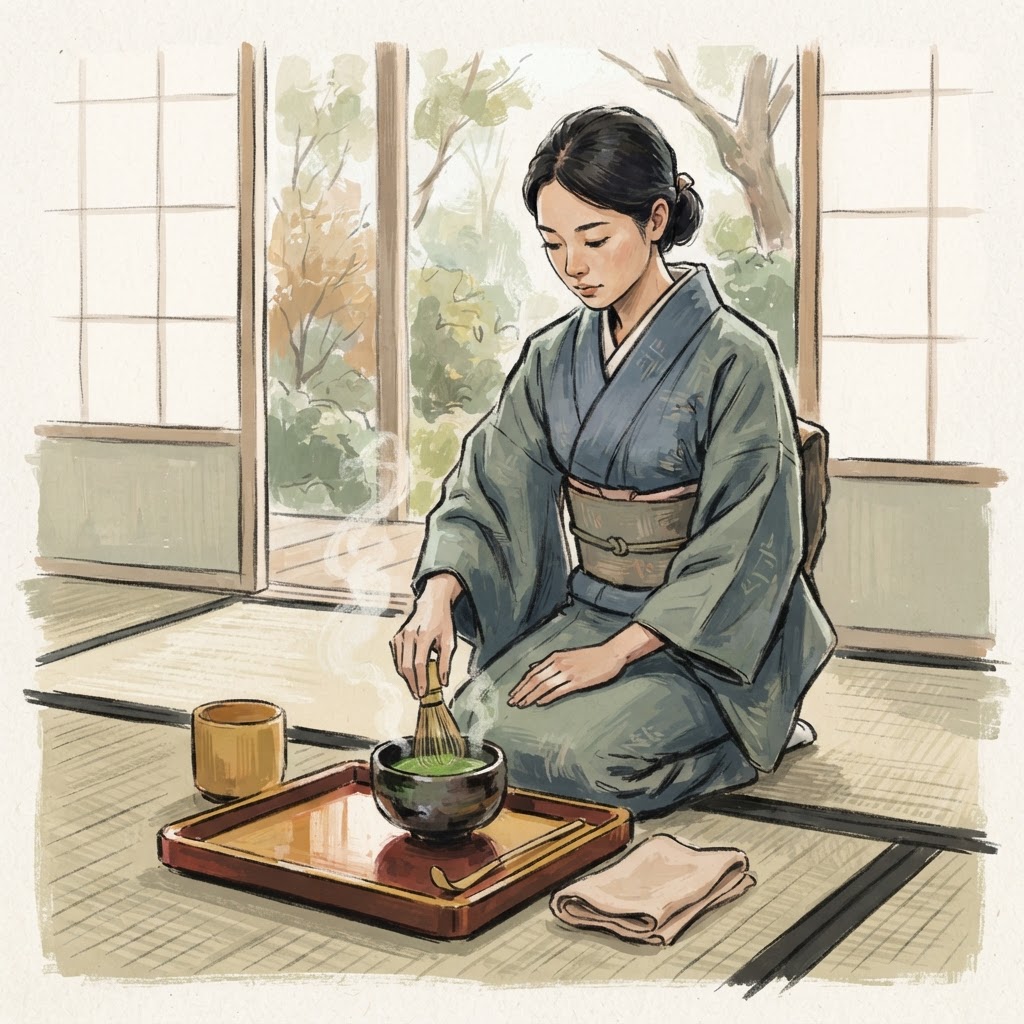
"In the tea ceremony, every gesture is both completely ordinary and completely sacred."
The tearoom at Urasenke is four and a half tatami mats wide — roughly nine square meters. It is, by any reasonable measure, too small for the weight of meaning it carries.
For over four centuries, the Japanese tea ceremony — chanoyu, literally "hot water for tea" — has served as a practice of aesthetic refinement, social ritual, and spiritual discipline. In a world that moves ever faster, its deliberate slowness feels less like tradition and more like resistance.
The Beauty of Constraint
Every element of the ceremony is prescribed: the angle of the whisk, the placement of the bowl, the number of steps from threshold to tea mat. These constraints, far from limiting, create a framework within which profound attention becomes possible.
"In the tea ceremony, every gesture is both completely ordinary and completely sacred."
The host prepares matcha — powdered green tea whisked with hot water — in movements so practiced they appear effortless. The guest receives the bowl with both hands, rotates it twice, drinks in three sips, and returns it. The entire exchange takes perhaps five minutes. The preparation may have taken hours.
Lessons in Attention
What the tea ceremony teaches, above all, is the discipline of presence. In a space stripped of distraction, where every object has been chosen with care and every movement carries intention, you discover how rarely you actually pay attention to anything.
This is not a metaphor. It is a practice — available to anyone willing to slow down long enough to notice.

Advertisement
Related Stories

The Quiet Revolution of Slow Cities
How a movement born in Italy is redefining what it means to live well

A Love Letter to Neighborhood Bookshops
In an age of algorithms, the curated shelf remains an act of radical generosity
Newsletter
The Northline Letter
A weekly curation of our best essays, quiet recommendations, and things worth your attention. No spam, no noise — just good writing delivered every Thursday.